Food Waste Statistics 2026
One-third of all food produced globally never gets eaten. In 2026, that means over 1 billion tons of food are wasted every year, while 783 million people go to bed hungry. The scale of this crisis is not new, but the urgency is. With the EU having adopted its first legally binding food waste reduction targets and food waste now firmly inside the Scope 3 disclosure conversation, 2026 is a pivotal year for businesses to get ahead of this issue. This report brings together the latest data from UNEP, WRAP, ReFED, the FAO, and the European Commission, giving sustainability leads and procurement teams the numbers they need to build the business case for change.

What Is Food Waste?
Food waste refers to edible food that is discarded or left uneaten at the retail, food service, or household level. Food waste is distinct from food loss, which occurs earlier in the supply chain, like during harvesting, processing, or storage. In practical terms, food loss happens before food ever reaches a shop or restaurant. The distinction matters in B2B conversations because it determines where the responsibility lies. Food loss is a supply chain challenge, while food waste at the retail and foodservice level is an operational and commercial one.
Measuring food waste involves tracking discarded food by weight, expressed as a share of total food available to consumers. The most widely cited global estimate uses this methodology, as published in the UNEP Food Waste Index Report 2024.
Global Food Waste Statistics
In 2022, the most recent year for which comprehensive global data is available, 1.05 billion tons of food were wasted at the retail, food service, and household levels, representing approximately 19% of all food available to consumers. An additional 13% was lost earlier in the supply chain before it ever reached consumers, meaning roughly one-third of all food produced globally is never eaten.
To put that in more human terms, the average person wastes 79 kilograms of food at home per year, which works out to more than one billion meals discarded somewhere in the world every single day.
Beyond the human cost, the financial toll is staggering. Global losses from food waste exceed $1 trillion annually, and without significant systemic change that figure is on track to reach $1.5 trillion per year by 2030. The environmental damage compounds the problem further, with food loss and waste responsible for 8–10% of global greenhouse gas emissions, almost five times the total emissions from the entire aviation sector. It also occupies 28% of the world's agricultural land and consumes a volume of water equivalent to three times the annual flow of the Volga River.
What makes all of this significant for businesses is that much of this loss is recoverable. The waste happening at the retail and foodservice level represents both a commercial opportunity and an area where targeted action can deliver measurable results.
Food Waste by Sector
Retail
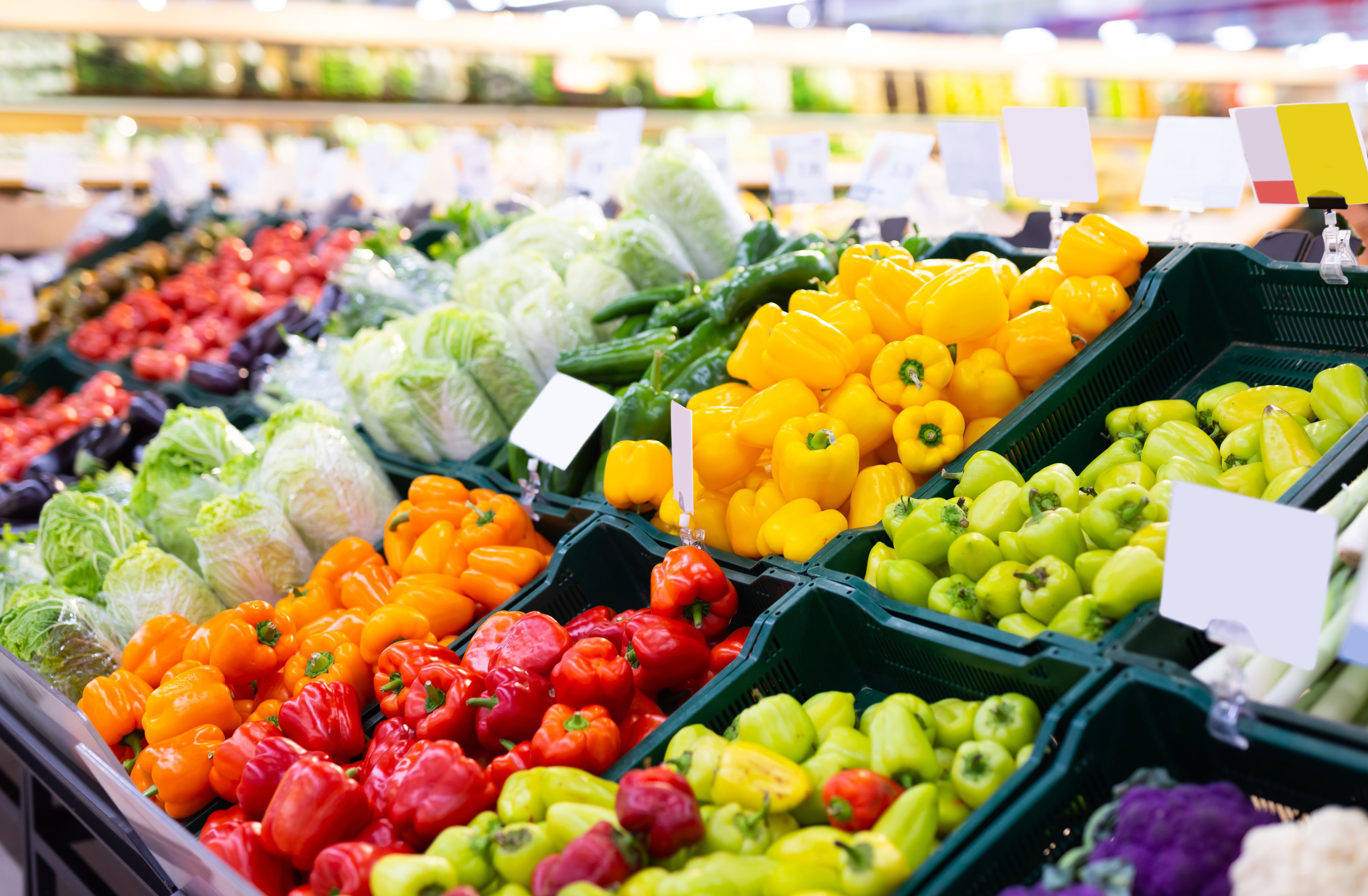
The retail sector generates an estimated 131 million tons of food waste globally per year, around 12% of all consumer-level waste. In the US alone, retailers generated 3.98 million tons of surplus food in 2024, with produce, fresh meat and seafood, and dry goods among the dominant categories.
What makes the financial picture particularly striking is that wasted food from the retail sector is valued at roughly twice the profit from food sales, meaning retailers are effectively paying more to stock shelves than they earn on the margin of what doesn't sell. A study of 3,500 retail leaders across seven countries found that food waste costs across the retail supply chain are equivalent to 33% of revenue, amounting to an estimated $540 billion globally this year. More than half of those leaders (54%) reported that waste-related costs have increased over the past three years, suggesting the problem is getting harder to ignore.
Data on retail waste remains patchy in some markets, as many retailers still don't publicly report waste volumes, making cross-market comparisons difficult. The new EU reporting requirements are designed to close that gap.
Hospitality and Foodservice
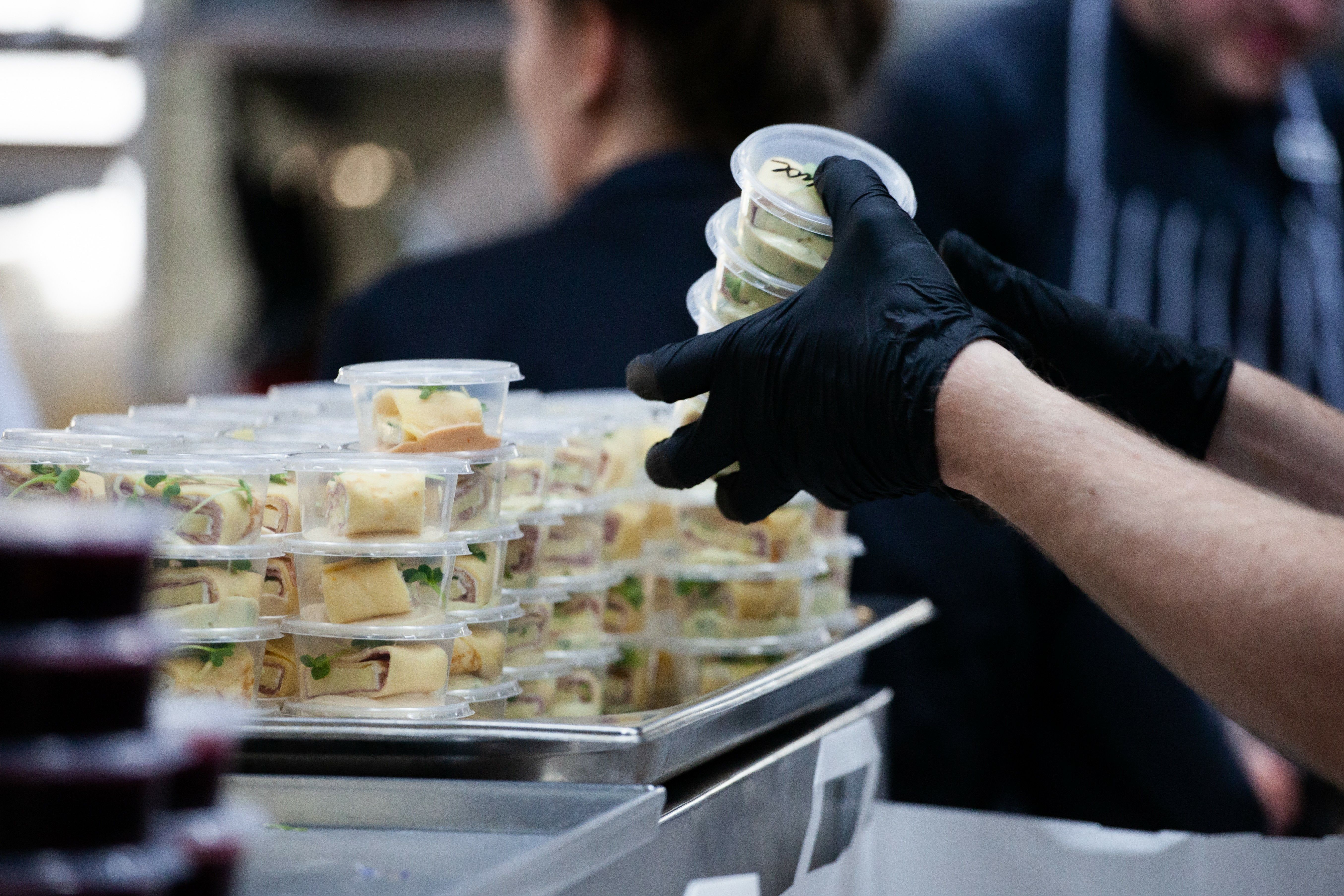
Food service accounts for 28% of global consumer-level food waste, totaling an estimated 290 million tons per year. In the US, restaurants and foodservice businesses generated 12.5 million tons of surplus food in 2024, with more than 85% going to landfill or incineration and less than 1% donated. The cost to the US restaurant industry from all of this waste is estimated at $162 billion annually.
The picture in the UK is similarly costly. The hospitality and food service sector there generates approximately 1.1 million tons of food waste per year, around 12% of the UK's total, with kitchen preparation waste accounting for around 45% of that figure. The underlying driver is the same in most markets: consumer expectations for full menus and immediate availability force operators to overstock, driving waste even when margins are already thin.
Food Manufacturing
Food manufacturing is a significant but often overlooked part of the food waste picture. US manufacturers contributed 18.8% of total surplus food in 2024, and at the EU level food manufacturing accounts for approximately 19% of total EU food waste, making it the second-largest sector after households.
Precise benchmarks in manufacturing are harder to come by than in retail or foodservice, partly because reporting requirements have historically been less stringent, but the EU's newly adopted Waste Framework Directive revisions are expected to change that.
Food Waste by Region
European Union
The EU generated 58.2 million tons of food waste in 2023, an average of 130 kilograms per inhabitant, with households generating more than half of that total. Manufacturing accounts for 19% of the remainder, with restaurants, food services, retail, and primary production making up the rest.
The most significant regulatory development in recent years came in September 2025, when the European Parliament adopted the EU’s first legally binding food waste reduction targets as part of the revised Waste Framework Directive. Member states are now required to reduce food waste in households, retail, restaurants, and food services by 30% by 2030, with a 10% reduction required in food processing and manufacturing. A coalition of over 65 organizations, including Too Good To Go, had called for more ambitious 50% reductions across the supply chain.
United Kingdom
The UK generates approximately 10.2 million tons of food waste per year, with households accounting for around 60% of that total. Despite that scale, the UK is frequently cited as a positive example of what targeted action can achieve: household food waste per person fell by 24% between 2007 and 2018 through a combination of public campaigns and industry partnerships. WRAP has set a voluntary commitment to halve food waste by 2030.
United States
The US generates around 70 million tons of surplus food each year, about 29% of the food supply, and roughly 60 million tons of that ends up wasted. The total value of that surplus reached about $380 billion in 2024, of which 85%, or around $325 billion, was food waste, equal to roughly 1.3% of GDP. Food also remains the single most common material in US landfills, which makes it both an economic and an environmental priority.
A national goal of 50% reduction by 2030 was set under the Biden-Harris Administration, though federal policy direction remains uncertain. As a result, state-level legislation and voluntary industry commitments are currently the most active levers for change.
Food Waste and Climate Change
Food loss and waste accounts for 8–10% of global greenhouse gas emissions annually, almost five times more than the entire aviation sector. To put that another way, if food waste were a country, it would be the world's third-largest emitter of greenhouse gases, behind only the US and China.
The land required to produce all this wasted food adds another layer to the problem. Approximately 28% of the world's agricultural land is used to grow food that ultimately goes to waste, an area larger than China and India combined, and every acre of it represents embedded environmental costs in the form of deforestation risk and biodiversity loss alongside the direct emissions. Water use is significant too, with an estimated 250 cubic kilometers of freshwater consumed each year producing food that is ultimately thrown away.
For businesses working toward net zero commitments, food waste is an increasingly important lever. Scope 3 emissions are now a required disclosure under IFRS S2 and emerging EU sustainability reporting standards, and the waste generated across a food retailer's or manufacturer's supply chain falls squarely within that category. Reducing food waste is therefore not just an operational efficiency measure but a material climate action that belongs in the sustainability report.
What Is the Cost to Businesses?
Food waste costs the global food industry approximately $1 trillion per year in wasted food value alone, and that figure doesn't capture the full picture. It leaves out the labor, logistics, and storage invested in producing food that is never sold, as well as the disposal costs incurred when it is written off.
At the retail level, a study of 3,500 retail leaders across seven countries found that food waste costs are equivalent to 33% of supply chain revenue, amounting to $540 billion globally in 2026, and the sector's wasted food is worth approximately twice the profit margin on the food it does sell. In food service, the US restaurant industry alone bears an estimated $162 billion in annual waste-related costs.
What makes this more than a cost story is the return available on the other side. Food-related businesses can experience up to a 14-fold return on their investment in food waste reduction programs, meaning for every dollar spent reducing waste, businesses can expect to recover significantly more in costs and recaptured revenue.
What Are Businesses Doing About It?
The business response to food waste is accelerating, driven in roughly equal measure by commercial pressure and tightening regulation.
On the operational side, AI-powered demand forecasting has emerged as one of the most impactful tools available. Results vary by deployment, with a peer-reviewed review of retail case studies finding an average reduction of around 15% per store, while individual grocers have reported cuts of 30% or more after adopting AI-driven forecasting. Alongside forecasting, dynamic pricing, which applies automatic markdowns to perishables as they approach their sell-by date, is moving from pilot to mainstream across major grocery chains. Many businesses are also turning to surplus redistribution platforms and date label reform as practical ways to recover value from food that would otherwise be discarded.
The regulatory pressure is running parallel to these operational shifts. The EU's revised Waste Framework Directive now introduces mandatory food waste measurement and reporting for member states, creating compliance obligations that cascade directly to food businesses. In the UK, WRAP's Courtauld Commitment 2030 continues to set the voluntary benchmark at 50% waste reduction. At the global level, UNEP's Food Waste Breakthrough, launched at COP30 in 2025, represents a coordinated international commitment to halve food waste by 2030, which would also cut methane emissions significantly in the process.
The consistent finding across all of this research is that businesses that measure their food waste reduce it, and that reduction translates directly into recovered margin. For most businesses, the starting point is simply establishing a baseline.
How Too Good To Go Helps Businesses Reduce Food Waste
Too Good To Go is a social impact company operating across 21 countries, with over 200,000 active business partners and 130 million registered users. Our model is simple. Businesses with surplus food at the end of the day list it on the Too Good To Go app as a Surprise Bag, sold to local consumers at a fraction of the original price. What would have been waste becomes recovered revenue.
Since 2016, Too Good To Go's partner network has collectively saved over 500 million meals from going to waste, equivalent to 1.3 million tonnes of CO₂e avoided. For business partners, that translates into measurable financial recovery from stock that would otherwise be written off, alongside a demonstrable contribution to their sustainability and ESG commitments.